
Think global, act everywhere
Off to the east coast
Time to go off to the east coast again to do a wildlife census for a couple of weeks. We will be looking mostly for moose, hare, capercaillie and roe deer.
A successful Rovdjurssymposium – Framtiden
 On Saturday the 25 of February Naturskyddsföreningen Värmland hosted the carnivore symposium Rovdjurssymposium – Framtiden. Around 100 people attended the symposium which offered several interesting talks as well as a dialogue between four organizations with sometimes conflicting interests in carnivore politics.
In the picture Camilla Wikenros from Grimsö forskningsstation holds a talk about how wolves affect the ecosystem.
Sveriges Radio, Värmlands folkblad and Nya Wermlands-Tidningen covered the symposium and you can read more in the links below.
 http://www.vf.se/nyheter/karlstad/vargdebattanter-narmar-sig-varandra
http://sverigesradio.se/sida/artikel.aspx?programid=99&artikel=4984401
http://sverigesradio.se/sida/artikel.aspx?programid=93&artikel=4986958
http://www.nwt.se/varmland/article1062849.ece
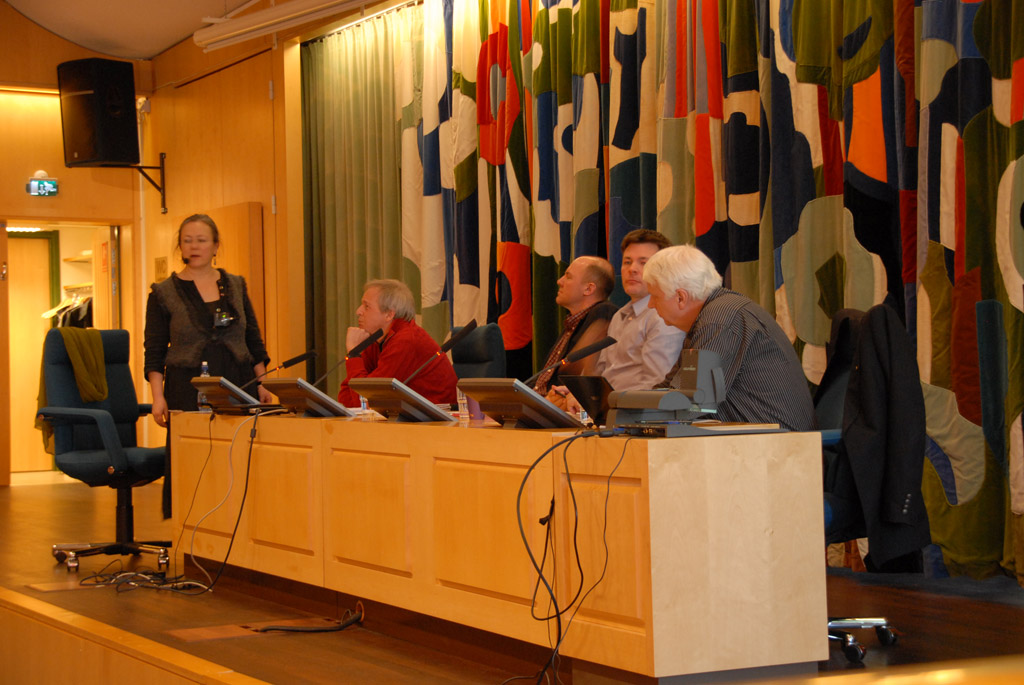 Agneta Setterwall leads a dialogue between Roger Olsson from Svenska Rovdjursföreningen, Sven Erik Hammar from Lantbrukarnas Riksförbund, Mikael Karlsson from Naturskyddsföreningen and Hans-Bertil Granewald from Jägarnas Riksförbund.
Back to Forsmark
Tonight I am going back to Forsmark to continue the carnivore census there for a few days. We found a family group of lynx the last time around and a lot of other animals.
The purposes of the census is seeing how the new end-storage facility for radioactive material will affect wildlife in the area and also to see how a potential leak would spread in the ecosystem.
Carnivore census
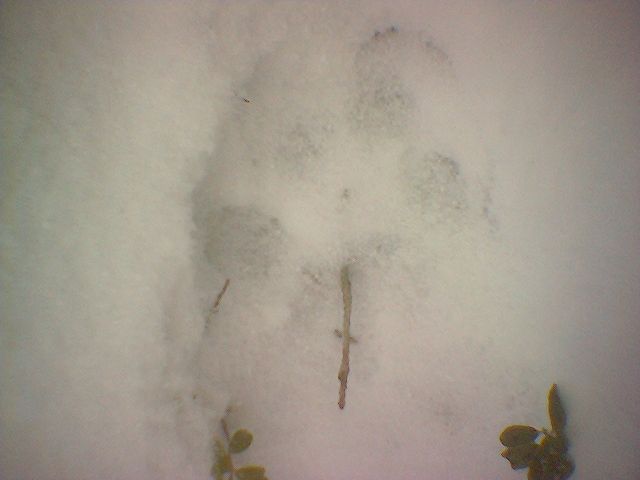 I have been out censusing carnivores for a few days in the area around Forsmark. I followed the tracks of a family group of lynx, a mother with two kittens for a couple of days. I also tracked marten and mink. There is a lot of roe deer in the area and I also came across tracks from wild boar.
The picture shows a track from a lynx north of Forsmark.
The Indus
 I could upload a host of amazing scenery of the Himalayas, but one picture kind of exceeds them all – the Indus.
Altitude sickness
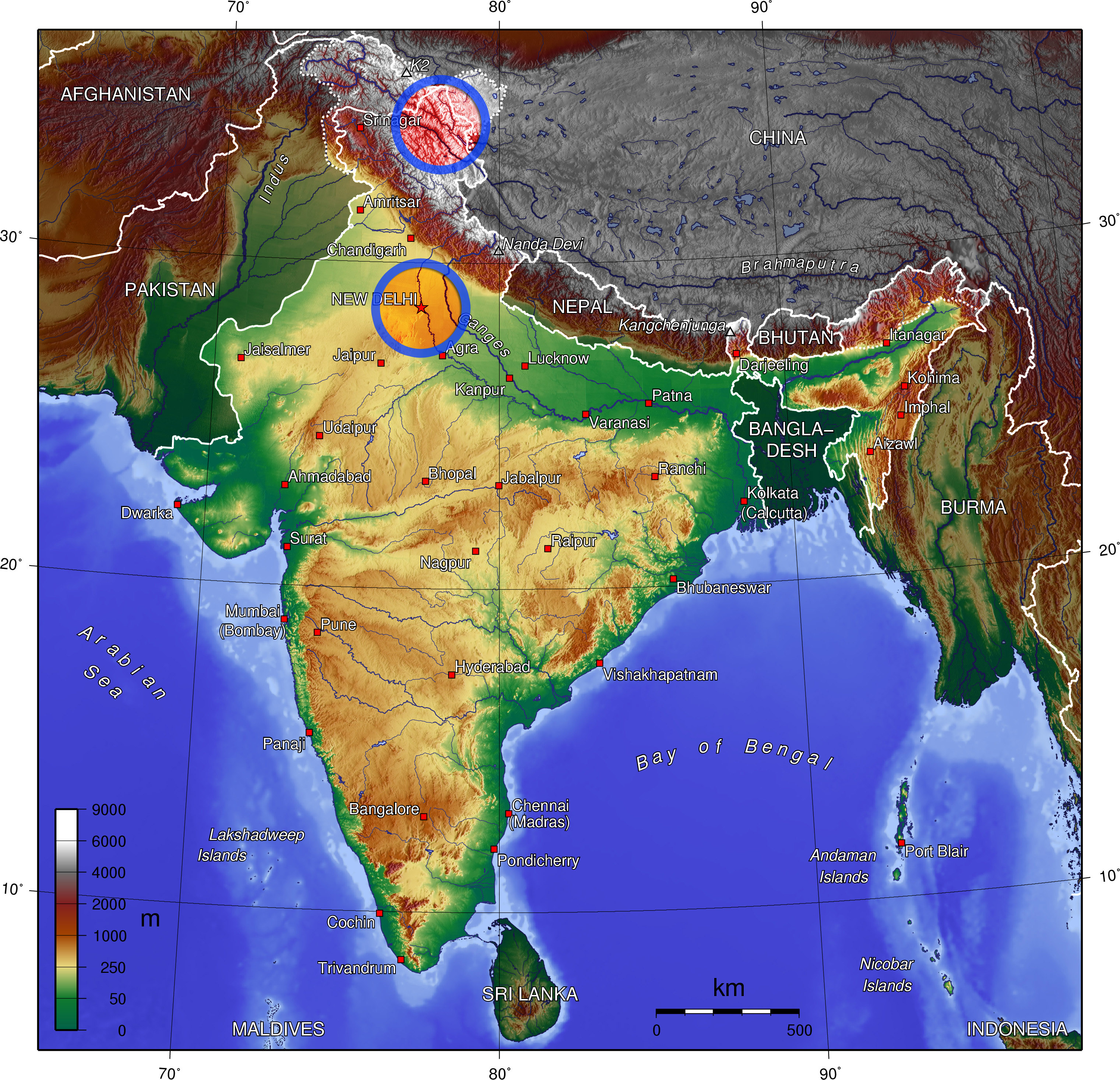
Struck by altitude sickness up in Ladakh, I came back home to Sweden yesterday. I am looking to go back there later on in the spring again.
I figured that I would feel like an alien in India but somehow it felt like home.
This is where I have been.
Saving Ladakh’s culture
Two days ago in Leh I met a senior Japanese culture teacher and photographer. He told me of a Swedish woman called Helena Norberg. He said that she came to Ladakh in the 1970s and managed to save much of Ladakh’s culture from the then newly introduced consumerism, something that he considers has destroyed most of the world’s cultures.
The more I read up on Helena Norberg the more I am in awe. She has studied cultures all over the world and has seen the effects of consumerism.
I would like to share a number of citations from her but I will contend with only one:
“When I first arrived in Leh, the capital of 5,000 inhabitants, cows were the most likely cause of congestion and the air was crystal clear. Within five minutes’ walk in any direction from the town centre were barley fields, dotted with large farmhouses. For the next twenty years I watched Leh turn into an urban sprawl. The streets became choked with traffic, and the air tasted of diesel fumes. ‘Housing colonies’ of soulless, cement boxes spread into the dusty desert. The once pristine streams became polluted, the water undrinkable. For the first time, there were homeless people. The increased economic pressures led to unemployment and competition. Within a few years, friction between different communities appeared. All of these things had not existed for the previous 500 years.”
So not only does consumerism destroy ecosystems, the climate and our potential to live on this planet, it also ravages our past and consumes ancient cultures.
Helena Norberg has founded the International Society for Ecology and Culture (ISEC) and the Women’s Alliance of Ladakh. What an amazing story.
First sighting
One evening two shadowy cats peeked down from one of the Himalayan hills – their creamy grey beauty warmed by the last rays of the setting sun as they sighted groups of ibex scattered around the mountain.
The snow leopard is a marvel to behold in its right environment.
Snow leopard book
 I have just signed a deal with a publisher to author a book on the endangered snow leopard together with the Swedish author and photographer Jan Fleischmann.
We hope to make it a very exciting book with personal stories intertwined with hard facts and an update on the most recent research, as well as good pictures of the animals and interviews with people that are involved with snow leopards in various ways.
The book will first be published in Swedish and we are then looking to make it available in English and maybe German.
You will read more on our work with this book on this page as it progresses.
Please note that the picture is for illustration and may not be the actual front page of the book.
 Jonatan Borling